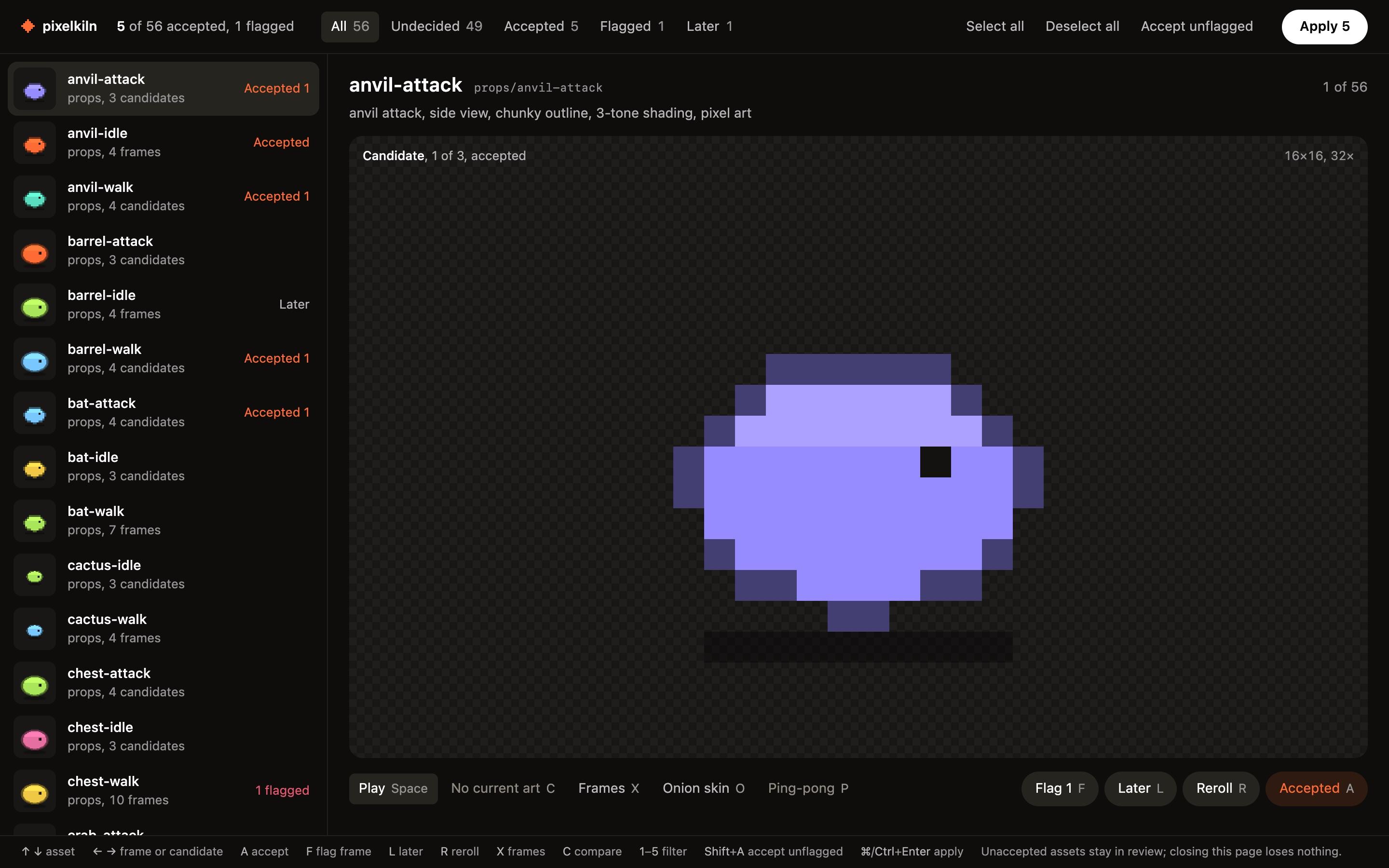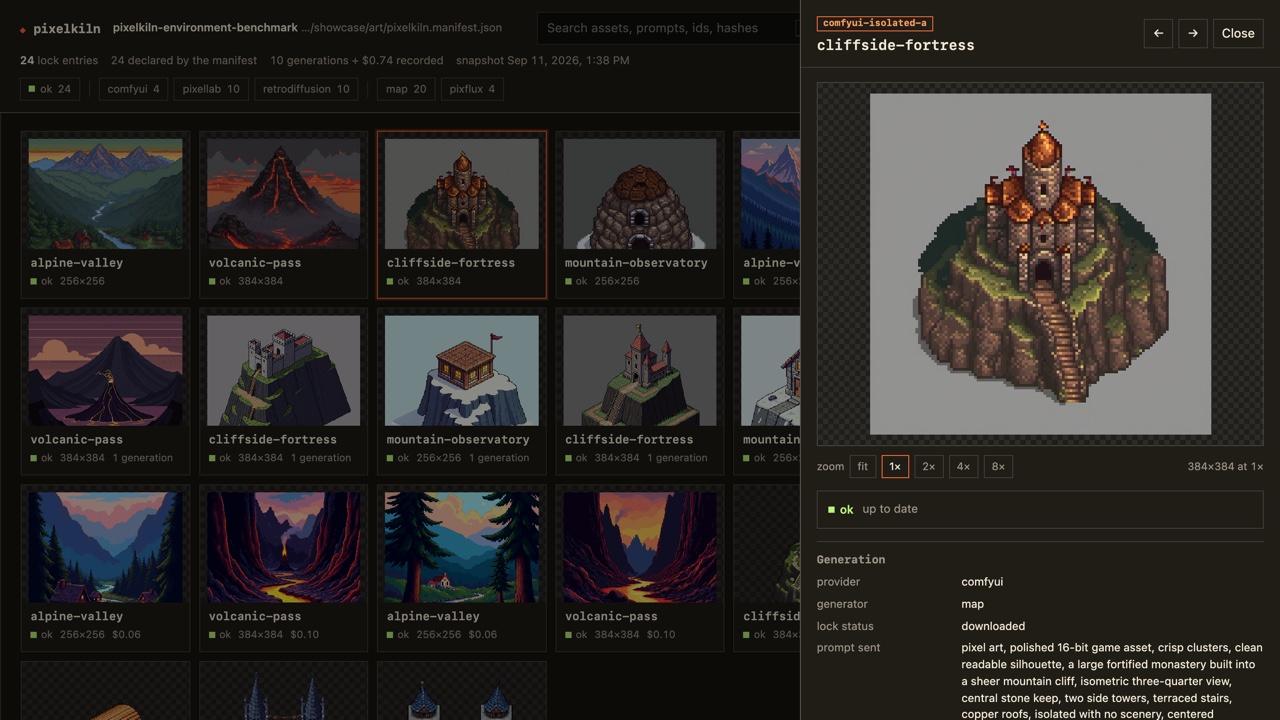
What the providers shipped.

When PixelLab, Retro Diffusion, ComfyUI or Scenario adds something PixelKiln can drive, it lands here with real output from the project's own manifests and what each call cost.

Set up PixelLab
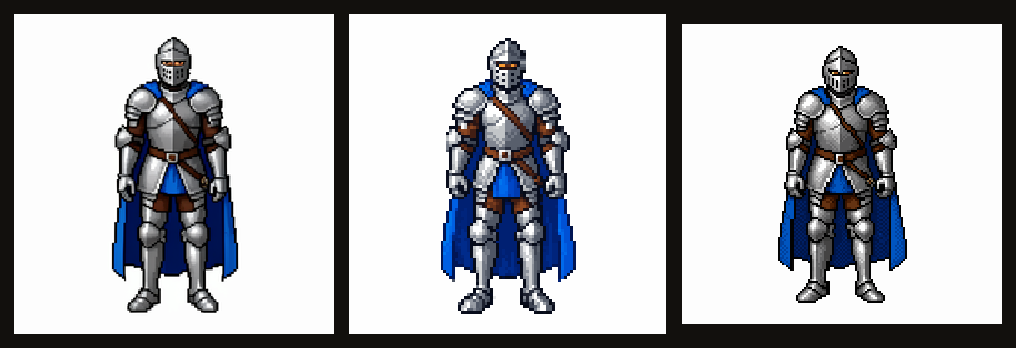
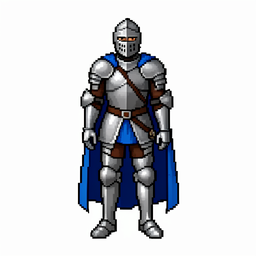
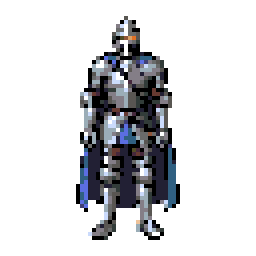
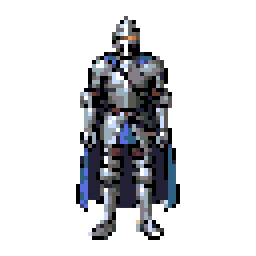
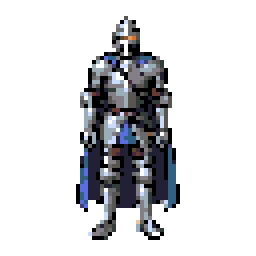
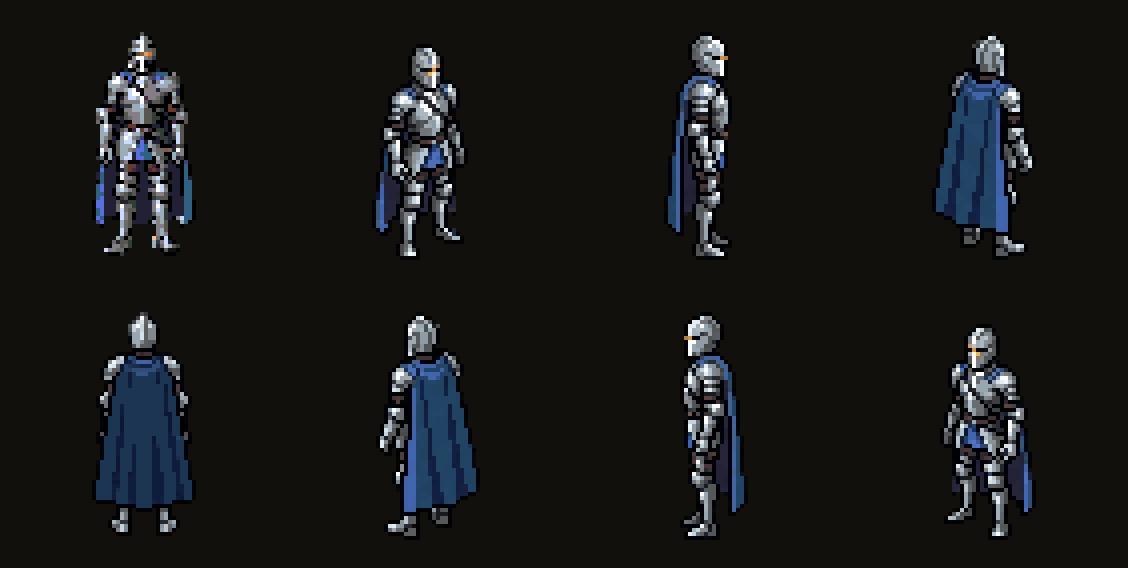
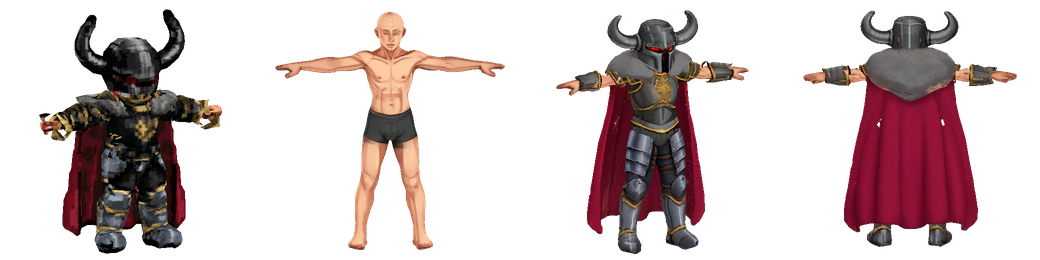
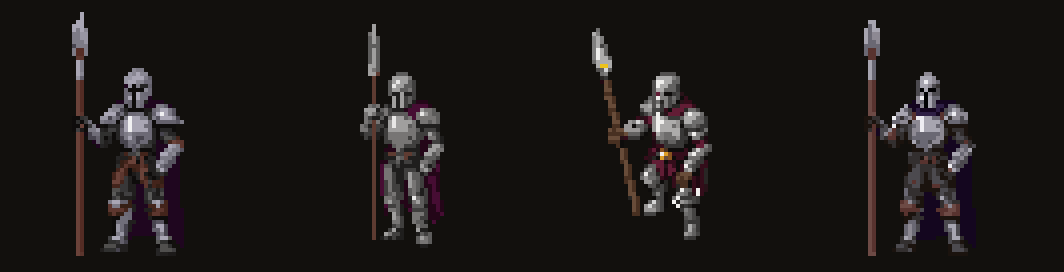
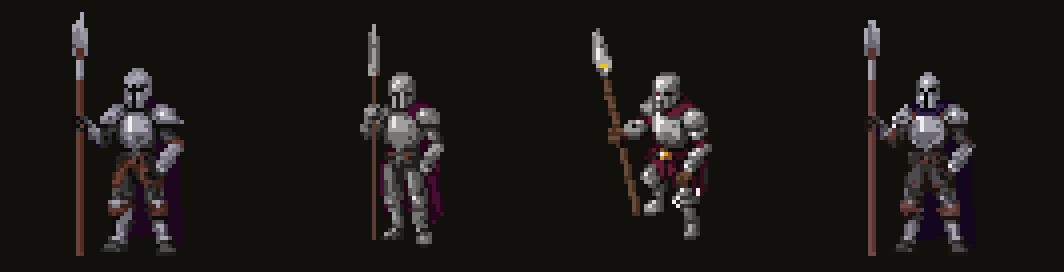
Four pixel art knights drawn with different pixflux style controls

Latest updates
from our providers.

When a provider ships something PixelKiln can drive, it lands here with what it cost. The newest update shows real output from the project's own manifests, and each earlier one keeps a short note and its reference.

PixelLab November 2026

Portraits that speak any line, after one paid step

PixelLab draws a portrait's mouth positions once, then lip-syncs any text to them for free. pixelkiln talk visemes makes the set and keeps it as a strip beside a record. talk gif and talk plan turn a line of dialogue into a GIF or into frame timings for your engine. The set below was billed 3 generations.

  • talk visemes takes a portrait PNG up to 256 pixels and writes 3, 5, 7 or 12 mouth positions as one strip. Nothing is stored on PixelLab.
  • talk gif --text writes a talking GIF of any line up to 500 characters. It costs nothing, however many lines you make.
  • talk plan --text prints which cell to show, for how long, and how far through the text each frame lands, so a game can draw the mouth and a subtitle highlight itself.
  • Give the portrait a visible mouth. A robot with none came back with seven nearly identical frames.

Seven copies of a young blacksmith's portrait, each with a different mouth shape: closed, slightly open, wide open, rounded, and teeth showing
seven mouth positions talk visemes on a 64 pixel portrait, default engine. 3 generations.
The blacksmith portrait speaking, his mouth moving through the shapes
a spoken line talk gif --text "Fire once. Ship every sprite with receipts." Free.

PixelLab November 2026

Effects that follow a walk cycle, not just a still

PixelLab's VFX artist takes an animated sprite and builds the effect around every frame of it. PixelKiln sends one from pixelkiln vfx --description as a GIF or a PNG strip, and from a manifest's vfx block with spriteFrames. Both effects below were billed 2 generations.

  • Pass a GIF as --sprite, or a horizontal PNG strip with --sprite-frames. --sprite-fps sets how fast it plays.
  • The effect comes back with the sprite's own frame count, so the trail stays in step with the feet.
  • The lite artist's quote goes up by 1 generation for an animated sprite, at every size and length we asked about.
  • PixelLab refuses a strip wider than 1,024 pixels. PixelKiln catches that before anything is sent and points you to a GIF.
An orange robot walking in place, eight frames
the sprite an 8-frame walk, sent as one PNG strip.
The same robot walking with a trail of orange embers streaming behind its feet
a fiery trail --sprite-frames 8 --sprite-fps 10, lite artist. 2 generations.
The robot walking inside a pulsing pale blue ring, with small sparks rising from the ground
a pulsing aura the same walk as a 12-frame GIF, lite artist. 2 generations.

PixelLab November 2026

Start from your own sprite, and choose how much of it survives

PixelLab's pixflux, map object and isometric tile generators take a starting image. PixelKiln sends one from an asset's initImage, and initImageStrength sets how hard it holds. Each image below is one call at the generator's usual 1 generation.

  • At strength 30 the prompt wins and the starting image only sets scale and placement.
  • At about 100 you get a restyle: the original silhouette, in the prompt's colors.
  • PixelLab's default of 300 holds much harder than it sounds. It returned the starting knight with none of the prompt's gold.
  • The file is hashed into the asset, so replacing it marks the asset stale, and a file changed after plan is refused before anything is spent.
Six knights in a row: a steel one, a gold one with a red cape, then four that move step by step from gold back to the original steel
one prompt, one starting sprite the starting sprite, the prompt alone, then initImageStrength 30, 100, 300 and 800. 1 generation each.

PixelLab November 2026

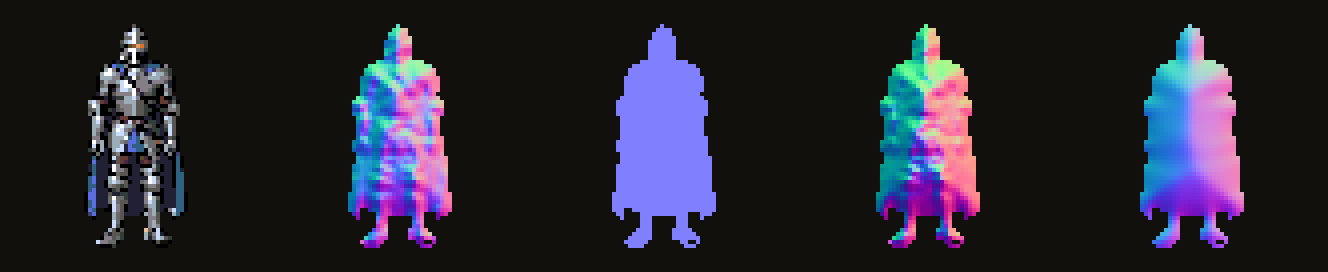
Normal maps for a fifth of the price, shaped the way you want

PixelLab added a lite mode to its normal maps and made it the default, so a map that billed 0.5 generation now bills 0.1. It also added controls for how a flat sprite is read as a surface. pixelkiln normal-map and the normal-map revision send them, and plan prices the new default.

  • --mode lite is 0.1 generation and --mode pro 0.5. Both were billed live; on this knight the two maps were close.
  • --surface-detail, --part-shapes and --outline-rounding set how much relief the map has. All at 0 gives a completely flat map.
  • --detail-softness blurs the detail into a smooth form, and --strength scales the tilt, up to 2.
  • --kind tells PixelLab what the picture is, for sidescroller, isometric and UI art.
  • In a manifest these are fields on a normal-map revision, and a map made before them is not stale.
A knight sprite and four normal maps of it: moderately detailed, completely flat, deeply sculpted, and smooth
one sprite, four maps the sprite, then PixelLab's defaults, every control at 0, every control at its maximum, and maximum softness. 0.1 generation each.

PixelLab November 2026

Tilesets take your own textures, and platform sets cost a third

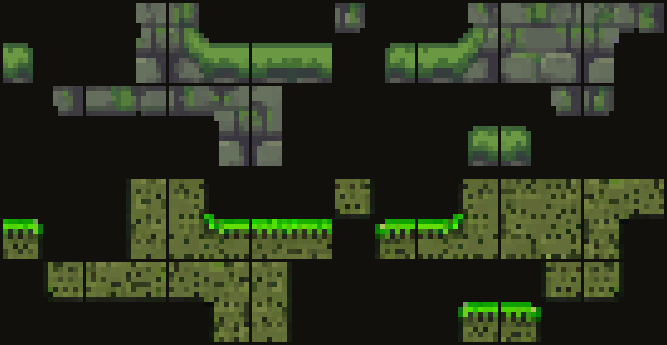
PixelLab replaced its sidescroller tileset model and added controls to both tileset endpoints. PixelKiln sends them from a manifest, and plan now prices a standard platform set at 1 generation, where it was 3. Every set below was generated for this page and billed what is shown.

  • terrainReferences hands PixelLab a PNG per terrain. It is used almost as the texture itself: the two striped swatches at right became the fill.
  • A sidescroller set takes terrainMode: standard for 1 generation, pro for 15. A standard set cannot connect to another, and plan says so before spending.
  • terrainSideWallThickness and terrainSideWallPlacement shape the wall on a raised bank; terrainShapeSeed reshuffles a ragged border.
  • terrainEnhance: false uses your terrain descriptions as written, and the walkable flags are stored with the set for maps and exports.
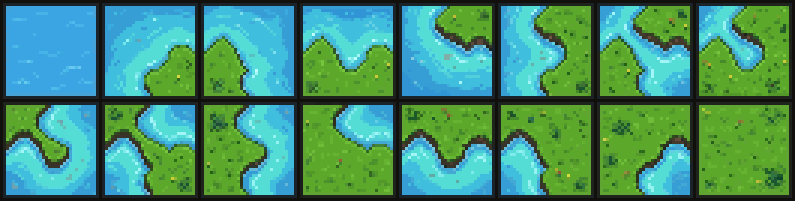
  • A tiles terrain set takes tileElevation for a raised bank and tileBoundaryAmplitude for a meandering border: the shore below billed 10 generations.
  • None of this moves an existing lockfile: each option enters a set's identity only when you set it.
A sixteen-tile set of teal striped pools in a purple striped floor, beside the two small striped swatches it was made from
your texture, their borders a standard set from two hand-made 16×16 swatches (right). 1 generation.
Two sixteen-tile platform sets: light mossy stonework above, denser earth with a bright grass cap below
standard above, pro below the same prompt as a sidescroller set on each mode. 1 generation and 15.
Sixteen tiles of grass meeting shallow water along a winding shoreline with a dark raised bank
a raised, winding shore tileElevation 4, tileStepSlope 1, tileBoundaryAmplitude 0.2 on 32px tiles. 10 generations.

PixelLab November 2026

Bring your own sprite, turn it eight ways, take it to your editor

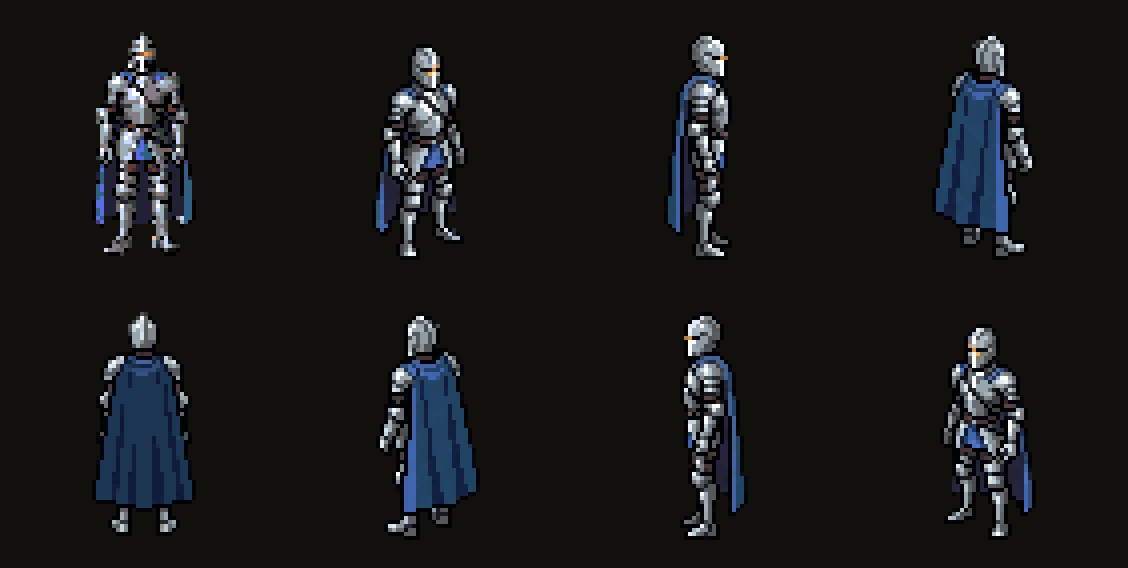
PixelLab opened up the upkeep its website does to an asset. pixelkiln asset imports your own art, expands it to 8 directions, resizes its canvas, and exports it, and pixelate --pro reaches the strongest converter. The knight below was imported as one PNG; the other seven directions billed exactly 10 generations.

  • asset import stores your PNG as an object, exactly as drawn, for free. With --kind tileset or --kind tiles it stores a tileset sheet or tile images you drew, ready for maps.
  • asset save writes pixels you edited by hand back over a stored sprite, loop, gallery image or tileset, and keeps what it replaced so you can undo it.
  • asset expand draws the 7 missing directions for 10 to 25 generations. asset review downloads them first, then --keep or --discard.
  • asset export writes a ZIP, a spritesheet with its layout, an .aseprite file, or a turning GIF. All free.
  • asset canvas adds or trims transparent margin without scaling the art, and PixelLab's own reason is shown when it refuses.
  • pixelate --pro is the careful converter: 20 generations, a larger and more faithful result, plus the same image on a reduced palette.
An armored knight with a blue cape seen from eight directions in a row, starting from the front
one sprite in, eight directions out top left is the imported PNG, unchanged; the other seven came from asset expand. 10 generations.
The same knight three times: a smooth render, a chunky pixel art version, and a finer pixel art version
render, Pro Flash, Pro the source, pixelate (108×109, 6 generations), and pixelate --pro (161×151, 20 generations).

PixelLab November 2026

UI panels become buttons with states and 9-slice

A generated UI panel used to be one flat image. PixelLab now splits it into elements, draws their states, and stores stretch insets, and pixelkiln ui does all three and pulls the pieces down. The states below billed exactly 10 generations.

  • ui split cuts a template into one element per shape, free. ui show lists the boxes before you commit.
  • ui states draws hover, pressed, or any state you describe for every element in one generation, so a set matches: 10, 15 or 25 generations by size.
  • ui nine-slice sets the border insets that stay crisp when a panel or button is stretched, free.
  • ui pull writes every image and a ui.json with each piece's box, size, insets and hash.
  • A state is not the size of its element: an 86x38 button came back 85x46 hovered and 82x42 pressed, so anchor by the centre.
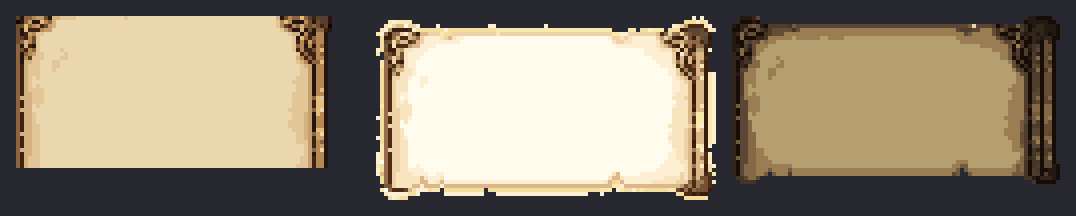
The same parchment panel piece three times: as generated, brighter with a glowing rim, and darker
one element, two states the split element, then hover and pressed from one call. 10 generations.

PixelLab November 2026

Music and sound effects, from the same account as your art

PixelLab now makes game music and sound effects. pixelkiln music and pixelkiln sfx write the audio beside a record of what made it. Every price below was read from a real bill.

  • music returns two takes of a song as MP3 for 10 generations. --loop adds seamless loops with a loop start and loop end for 4 more.
  • sfx writes one WAV, 0.5 to 30 seconds, from 1 generation: a 1 second laser shot billed 1 and a 3 second clip billed 2.
  • music style turns a short idea into a full style and music lyrics drafts two sets of lyrics, at 0.05 generations each.
  • A loop needs 36 seconds of music between the intro and the ending, so --loop on a shorter song is refused before anything is sent.
  • Audio stays outside the manifest for now: each file gets a .music.json or .sfx.json record with its id, hash, length, and bill.
town theme "Calm chiptune town theme", 30 seconds at 100 BPM, take 1 of 2. 10 generations for both.
laser shot sfx --seconds 1. 1 generation.
chest opening sfx --seconds 3. 2 generations.

PixelLab October 2026

Custom animation on skeleton v3, from a sentence or your own poses

PixelLab's character creator now animates a character from one sentence or from skeletons you pose. PixelKiln sends both from a manifest. Each loop below billed exactly 3 generations for 8 frames.

  • A skeleton-v3 loop with a prompt and no template animates the sentence: 3 to 15 frames, on a v3 character.
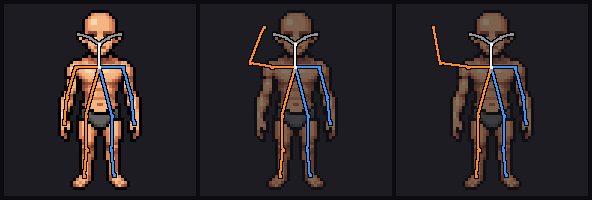
  • animate-skeleton poses your own 18-joint skeletons, and pixelkiln estimate-skeleton starts the file from an image.
  • A standard character has no 3D skeleton, so plan refuses it and says why.
  • Each direction of a sentence loop is its own request for now, so directions can move a little differently.
An adventurer with auburn hair and a blue tunic waving both arms overhead
from a sentence "cheerfully waving both arms overhead", 8 frames at 96×96. 3 generations.
The same adventurer raising and swinging both arms, following poses drawn by hand
from hand-edited poses eight skeletons edited from estimate-skeleton, 64×64. 3 generations.

PixelLab 0.4.130
October 2026

Connected tilesets, palettes, normal maps, and described effects

Every image below came from a real call, and each one billed exactly what pixelkiln plan said it would.

  • A connected set waits for the set it shares a terrain with, sends that set's tile id, and goes stale when it is regenerated.
  • terrainRoundness: 2 with terrainConnectDiagonals cuts the coast at 45°. Sidescroller platform sets cost 3.
  • A style's palette now reaches Create Image Pro, and maxColors caps each candidate. PixelLab has since added it to more tools, and PixelKiln sends it to Pro Flash stills, tiles, Pro terrain, objects, UI, and Pro characters.
  • pixelkiln normal-map and vfx --description do the same for loose files.
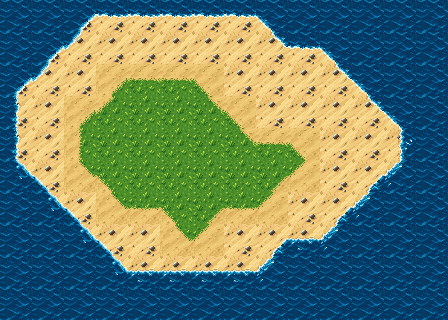
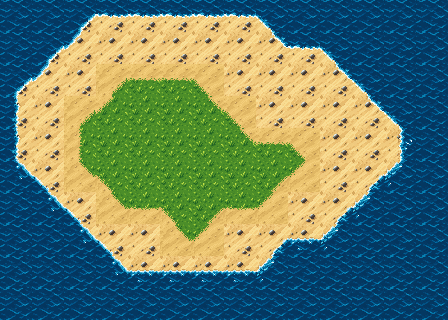
A sandy island with a grass meadow in the middle, surrounded by ocean, edges cut at 45 degrees
two connected Pro sets ocean to sand, then sand to grass, which shares the first set's sand. 15 generations each.
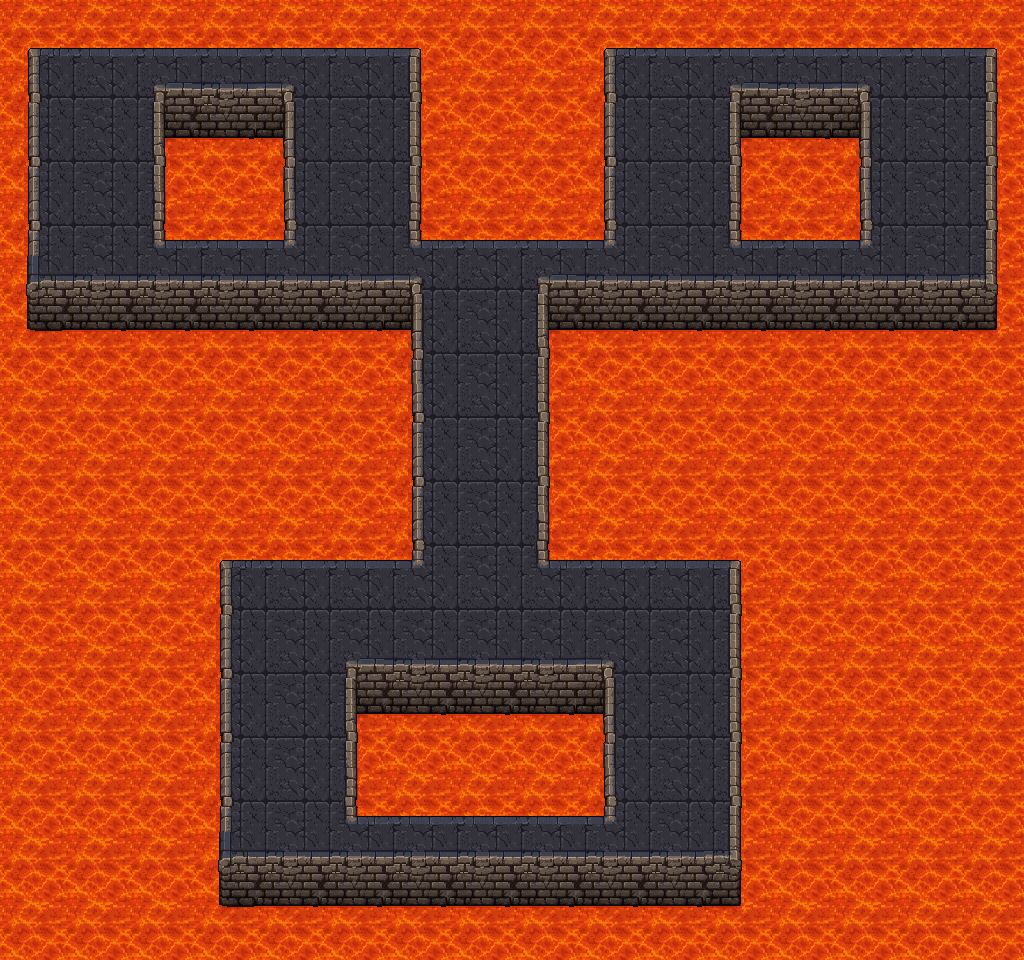
Dark stone dungeon floors raised over a lava sea, with brick walls dropping into the lava and lava pits cut into the floors
one Pro set with tall walls lava under dungeon stone at 64px, transition 0.5: 25 tiles, walls included. 25 generations.
A treasure chest drawn in the four Game Boy greens
Game Boy palette imagePro, 16 candidates, every pixel one of four colours. 10 generations.
The same chest lit by a light circling it, using its normal map
normal-map revision the chest under a moving light. 0.5 generations.
A small orange fireball with a flickering trail
described effect "a small orange fireball flying right", lite artist. 1 generation.

PixelLab 0.4.128
October 2026

A Pro price cut, Image to Pixel Art Pro Flash, and Create VFX

Every Pro tool dropped from 20, 25, or 40 generations to 10, 15, or 25, and pixelkiln plans with the new prices.

  • pixelkiln pixelate turns a photo, painting, or render into pixel art for 6 generations.
  • pixelkiln vfx renders animated effects from presets and parts, free on a subscription.

Scenario October 2026

Scenario's tool models, chained in one manifest

PixelKiln runs Scenario's Pixelate and background-removal models as steps after a render. This chain cost 8 compute units, and every quote matched its bill.

  • revision.fromStyle names the parent's style, so pixelkiln gen runs the render, the Pixelate step, and the cutout in order, one wave per link.
  • Pixelate (model_sc-pixelate, 5 CU) puts the render on a 64-cell grid and a 32-colour palette, and Birefnet (2 CU) removes the background.
  • pixelkiln refine finishes it for free: a 64×64 transparent sprite that waits for a person's approval.
A knight rendered by FLUX.2 Klein 9b on a white background
1 CU render
The knight pixelated onto a 32-colour palette
5 CU Pixelate
The pixelated knight with its background removed
2 CU Birefnet cutout
The final 64 by 64 transparent knight sprite after refinement
free refine, 64×64

More of PixelKiln.

Teach your agent PixelKiln.

The skill tells compatible agents when to plan, when to ask for a budget, when to restore existing work, when to stop for human review, and how to verify output.

Agent setupLibrary quickstart